


Hard Time
4.030.21K Reviews
App Specs
- Version
- 1.530.64
- Updated On
- License
- Free
- Downloads
- 10,000,000+
- Developer
- MDickie
- Categories
- Adventure
- Platform
- Android
Screenshots

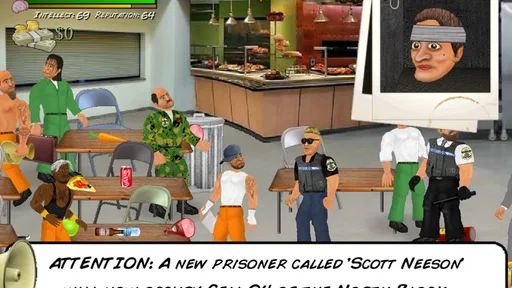
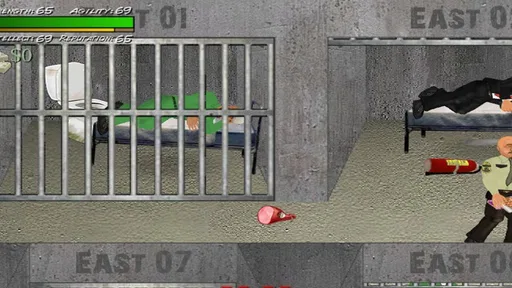
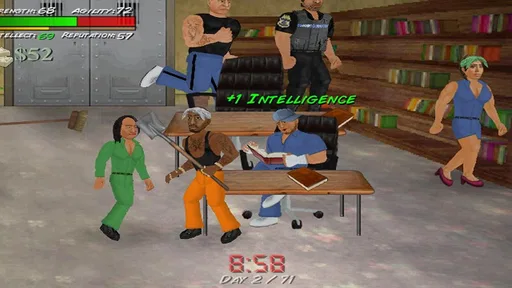
 Analysis by AppCompare
I would go into Hard Time expecting a messy, reactive prison adventure rather than a carefully guided story. Its appeal is the pressure of managing a character in a place where small choices can turn into larger problems. That can make a short play session surprisingly eventful, but it also means the game may feel confusing if you prefer clear objectives and steady progress. My best advice for a first visit is to treat the opening as a chance to learn how the world responds, not as a test you have to win immediately.
Getting your bearings before trouble starts
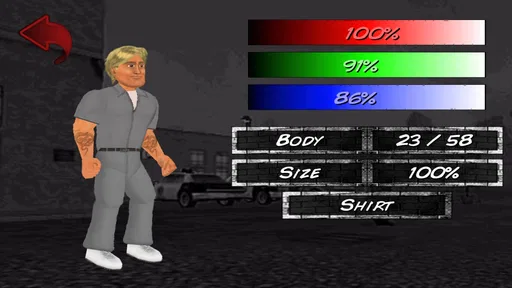
After installing, take a moment to get comfortable with character creation and the touch controls before rushing into conflict. The game gives you room to personalize your character, but the more useful early habit is to notice how movement and actions feel on your device. In a crowded situation, trying to work out controls while people are reacting around you can make a bad moment worse. A calm start gives you a better chance to understand what you can do and when.
For a first run, I’d choose a simple goal: make it through the opening stretch without turning every encounter into a fight. Pay attention to your character’s condition and mental state, and look for ordinary activities such as chores or exercise as a way to give the session some structure. This is not a promise that the prison will leave you alone; it is a practical way to avoid making your own situation harder before you understand the consequences.
Turning a first session into a useful lesson
A meaningful early success does not have to be a dramatic escape or a string of victories. I count it as a good first session if I can move around with confidence, complete a task, and finish without letting one argument dictate the whole experience. When a confrontation does happen, notice what led up to it and how your character’s state changes afterward. That little bit of observation is more useful than repeating the same risky move and hoping for a different outcome.
The social side also rewards patience. Rather than treating every inmate as an automatic enemy or ally, I’d watch how interactions develop and avoid making a quick promise of trust. Alliances can help, but they are not a substitute for paying attention to the situation around you. Keeping some distance until you understand the people and rhythms of a run makes the unpredictable parts easier to read.
Who will enjoy this kind of chaos?
This adventure game is a strong fit if you enjoy emergent situations, rough-edged simulation, and stories that come from your own decisions instead of a polished sequence of missions. It is less suitable if you want a calm prison-management game, a realistic procedural account, or a tightly directed campaign with obvious checkpoints. The humor and disorder are part of its identity, so players who want a solemn, grounded treatment may find the tone a poor match.
Hard Time is free to play, though it includes in-app purchases priced at $2.99 per item. The game is made by MDickie, carries a Teen content rating, and its current version is 1.530.64. It has an average rating of 4.0 from around 371,000 ratings, with over 10 million installs. Those figures suggest a large audience, but they cannot tell you whether its particular mix of awkwardness, conflict, and freedom will suit your taste. I’d try the free game first and decide from the feel of a real session rather than assuming popularity means a polished experience.
Worth Reading Before You Choose

EA SPORTS FC Mobile 26 Is a Bigger Football Game, but It Takes Time

Flipboard Shows What News Apps Must Do Beyond the Feed

Switching to Android Auto Means Rethinking Your Driving Routine

Google Calendar Makes a Crowded Week Easier to Manage

Ludo King Makes the Most of the Minutes Between Plans

Baby Panda World Brings Quick Play to Modern Phones, but Its Game Library Feels Busy
The Ultimate Prison Experience
Hard Time isn’t just about serving your sentence; it’s about surviving it. From the get-go, you’re thrust into a gritty environment where every decision counts. You start by customizing your character, which is always a fun way to personalize your experience. But once you’re in, things get real fast. You’ve got to maintain your health, keep your fellow inmates happy, and avoid trouble with the guards.
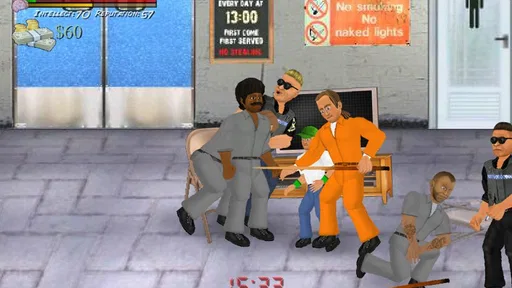
The game’s mechanics are straightforward but engaging. You’ll spend your days completing various tasks, from chores to exercising, and even engaging in brawls. Yes, brawls are a part of daily life here, and they can be both a means of survival and a way to climb the social ladder. But be warned: get too carried away, and you might find yourself in solitary confinement.
Living on the Edge
One of the most intriguing aspects of Hard Time is its focus on mental health. As you navigate prison life, you’ll need to keep an eye on your character’s mental state. Too much stress and not enough social interaction can lead to a breakdown, which can seriously affect your gameplay. It’s a clever addition that adds depth and realism to the game.
Interacting with other inmates and forming alliances is crucial. You’ve got to decide who to trust and who to avoid, which can change the course of your journey. The social interactions are surprisingly rich, offering a mix of humor and tension that keeps you on your toes.
Graphics and Gameplay
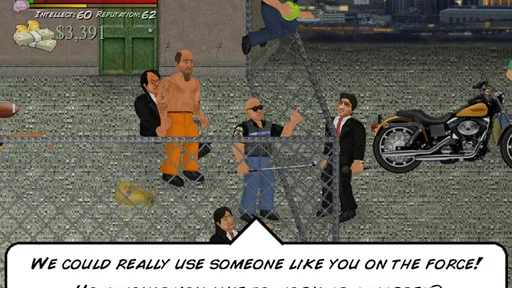
Let’s talk visuals for a moment. The graphics in Hard Time are simple and somewhat reminiscent of older console games. While not groundbreaking, they do the job well enough to immerse you in the prison environment. It’s a style that grows on you, especially if you’re a fan of retro aesthetics.
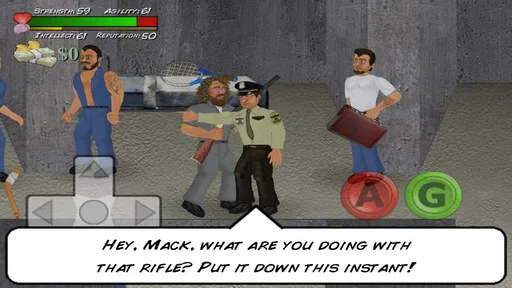
The controls are intuitive, making it easy to pick up and play. Whether you’re on Android or iOS, the touch controls are responsive, which is crucial when you’re trying to navigate a big brawl or escape a sticky situation.
The Verdict
So, is Hard Time worth your time? If you’re looking for a game that offers a unique, challenging experience, then absolutely. It’s not your typical simulation game; it’s a gritty, sometimes humorous look at prison life that keeps you engaged from start to finish.
Sure, it might not have the flashiest graphics or the most polished mechanics, but it compensates with its depth and the sheer unpredictability of its gameplay. Every session is different, and that’s what keeps you coming back for more.
If you’re up for a challenge and want to test your survival skills in a virtual prison, give Hard Time a shot. Just remember, in this game, every decision counts, and sometimes, it’s the little choices that make the biggest difference. Ready to face the music? Download it now and see if you have what it takes to make it through hard time.
Choosing your own pace in a reactive prison
One useful way to approach the game is to think in terms of risk rather than a fixed route. A chore or workout gives your day a purpose without automatically making every nearby character a threat, while a brawl can change the mood of a run quickly. I would not treat fighting as the default answer to every slight. If you are still learning the controls or trying to keep your character stable, walking away from a provocation can be a more valuable success than winning the encounter.
That trade-off is especially helpful when you only have a few minutes to play. A short session can still feel complete if you set a modest intention, such as tending to your character’s needs and seeing how one interaction unfolds. By contrast, launching into several confrontations at once can leave you with a confusing chain of consequences and little sense of what caused them. The game’s unpredictability is entertaining, but it is easier to enjoy when you create a small objective for yourself.
How it differs from more directed adventures
Compared with adventure games built around marked objectives, scripted scenes, and a clear next step, this one puts more weight on reacting to whatever is happening around you. That freedom is the point: a session can become a story about an uneasy alliance or a poorly judged fight without following a conventional mission structure. The trade-off is that players who want a strong narrative thread may feel that events lack direction. If you usually prefer a clear quest log and carefully staged progression, a more story-led adventure will likely be a better choice.
It also feels different from a management game that focuses on planning a facility, organizing resources, or overseeing a group from a distance. Here the attention stays close to your character and immediate encounters. I find that makes the prison feel personal and volatile, but it does not offer the detached strategic overview some players may expect from a simulation. Choose it for direct, character-level improvisation, not for designing an orderly institution.
Small habits that make the rough edges easier
The simple visuals and occasionally rough mechanics are worth understanding before you settle in. They help the game run with a deliberately old-fashioned feel, but they can also make the experience less polished than newer mobile adventures. When an encounter goes sideways, I would avoid assuming that every result reflects a carefully balanced system; some of the fun is in the awkwardness, and some frustration comes from it too. Players who need precise feedback and consistently smooth control may be happier elsewhere.
A practical habit is to change one thing at a time when a run becomes difficult. If your character is under pressure, focus first on getting into a calmer situation instead of immediately picking another fight, then see whether ordinary activity or social contact changes the tone. This makes it easier to understand cause and effect. It is not a guaranteed strategy for avoiding trouble, but it gives you a clearer read than trying several risky actions in quick succession.
Another useful distinction is between losing a moment and losing the whole session. A setback can be part of the story this game creates, so I would not restart just because the opening was untidy. Continue long enough to see how the character’s condition and relationships respond. If the run still feels frustrating after you have tried a slower approach, starting fresh is reasonable; the game is built for unpredictable situations, not for punishing yourself through a session you are no longer enjoying.
A realistic way to try it on a busy day
Imagine opening the game during a short break, with no time to learn a long campaign. I would use that session to customize a character, get familiar with movement, and choose one low-pressure activity. If someone causes trouble, I would treat the exchange as a chance to learn how the game reacts rather than as an obligation to fight back. That approach gives a newcomer a fair first impression: there is enough room for a small story to emerge, but no need to master every system before the game becomes interesting.
For a longer session, I would switch from simply staying out of trouble to paying attention to patterns. Notice which interactions seem to raise tension, whether keeping company helps your character, and how much risk you are willing to accept for a more exciting run. This turns the game into a series of experiments rather than a puzzle with one correct solution. It also helps explain why two players can have very different impressions: one may enjoy improvising through disasters, while another may want a more controlled path.
What to expect from the first few attempts
It is normal for the opening to feel less like a tutorial and more like being dropped into a busy place and learning by doing. I would not interpret early confusion as proof that you are playing badly. Focus on basic movement, character condition, and the immediate social situation; once those are familiar, the choices become easier to weigh. If you are looking for a gentle onboarding experience that explains every system step by step, this may not be the most reassuring option.
The game is also best approached with a flexible idea of success. Staying out of isolation, finishing an ordinary task, or simply understanding why a situation escalated can be a worthwhile result. That mindset makes the rough, emergent structure more rewarding and reduces the urge to chase a perfect run. On the other hand, if you mainly enjoy games where progress is measured through clearly displayed milestones, the loose structure may feel unsatisfying rather than liberating.
Who should pass, and who should give it a chance
I would steer away from this one if you dislike frequent conflict, want a polished cinematic presentation, or prefer every action to have an obvious and predictable result. Its prison setting and rough humor are central to the experience, and the game’s loose structure can make some sessions feel more chaotic than purposeful. A player looking for a quiet, realistic account of incarceration should also choose a different kind of game; this is an exaggerated adventure, not a documentary treatment.
But if you like mobile games that can produce an unexpected little story from a few choices, it is easy to see the appeal. The free entry point makes it practical to test whether the controls and tone suit you before considering any optional purchase. I would recommend starting without spending, learning how the basic loop feels, and only then deciding whether you want anything beyond that. The game works best when curiosity, rather than a need for polish or certainty, is what brings you in.
Making the next run more intentional
Once you understand the basics, give each new session a different personal rule. You might try to avoid unnecessary confrontations, focus on keeping your character in a better state, or see whether a cautious approach changes your relationships. These are not formal challenges the game needs to announce; they are ways to make its open-ended play easier to read. A simple rule also prevents every run from collapsing into the same cycle of reacting to the loudest problem.
My overall recommendation is to try it when you want a scrappy, unpredictable adventure rather than a carefully polished prison simulator. Its strongest moments come from watching everyday choices turn into tense or funny situations, while its weakest moments come when the rough controls or uncertain consequences get in the way. Go in with modest goals, give yourself time to learn the social and character pressures, and judge it by whether that improvised rhythm is enjoyable for you.
Pros
- Engaging storyline keeps players hooked.
- Diverse character customization options.
- Open-world environment offers exploration.
- Humor adds a fun twist to gameplay.
- Regular updates enhance player experience.
Cons
- Graphics may feel outdated to some.
- Controls can be unresponsive at times.
- Advertisements interrupt gameplay frequently.
- In-app purchases can be pricey.
- Lack of multiplayer mode limits interaction.
FAQs for Hard Time
What is the main objective of Hard Time?
Hard Time is a prison simulation game where players must survive and navigate through the harsh realities of prison life. The main objective is to manage your character's needs, build relationships, and complete various tasks to increase your reputation and ultimately gain freedom. It combines elements of role-playing and strategy to offer a unique gaming experience.
How does the control system work in Hard Time?
Hard Time features a simple yet engaging control system. Players can move their character using a virtual joystick and perform actions like interacting with objects or engaging in combat with dedicated buttons. The interface is designed to be intuitive, allowing players to quickly adapt and focus on strategic decision-making and survival tactics within the game.
Is Hard Time suitable for all age groups?
Hard Time is rated for mature audiences due to its depiction of violence, crime, and adult themes. The game simulates a prison environment, which may include scenarios not suitable for younger players. It’s advisable for parents to review the game content before allowing children to play, ensuring it aligns with their age and maturity level.
Does Hard Time require an internet connection to play?
No, Hard Time can be played offline, making it convenient for players who want to enjoy the game without needing a constant internet connection. This allows for uninterrupted gameplay at any time, whether you're commuting, traveling, or simply in an area with limited internet access.
What customization options are available in Hard Time?
Hard Time allows players to customize their character's appearance and attributes. You can choose different looks, outfits, and stats that influence gameplay. This customization adds a personal touch, letting players tailor their experience and strategy according to their preferences and the challenges they wish to tackle in the prison environment.


